

Art
#collage
#identity
#Indigenous culture
#painting
#sculpture
#Sobé
Sobé’s Morphing Portraits Articulate the Nuances of Gender Identity
June 20, 2024
Jackie Andres
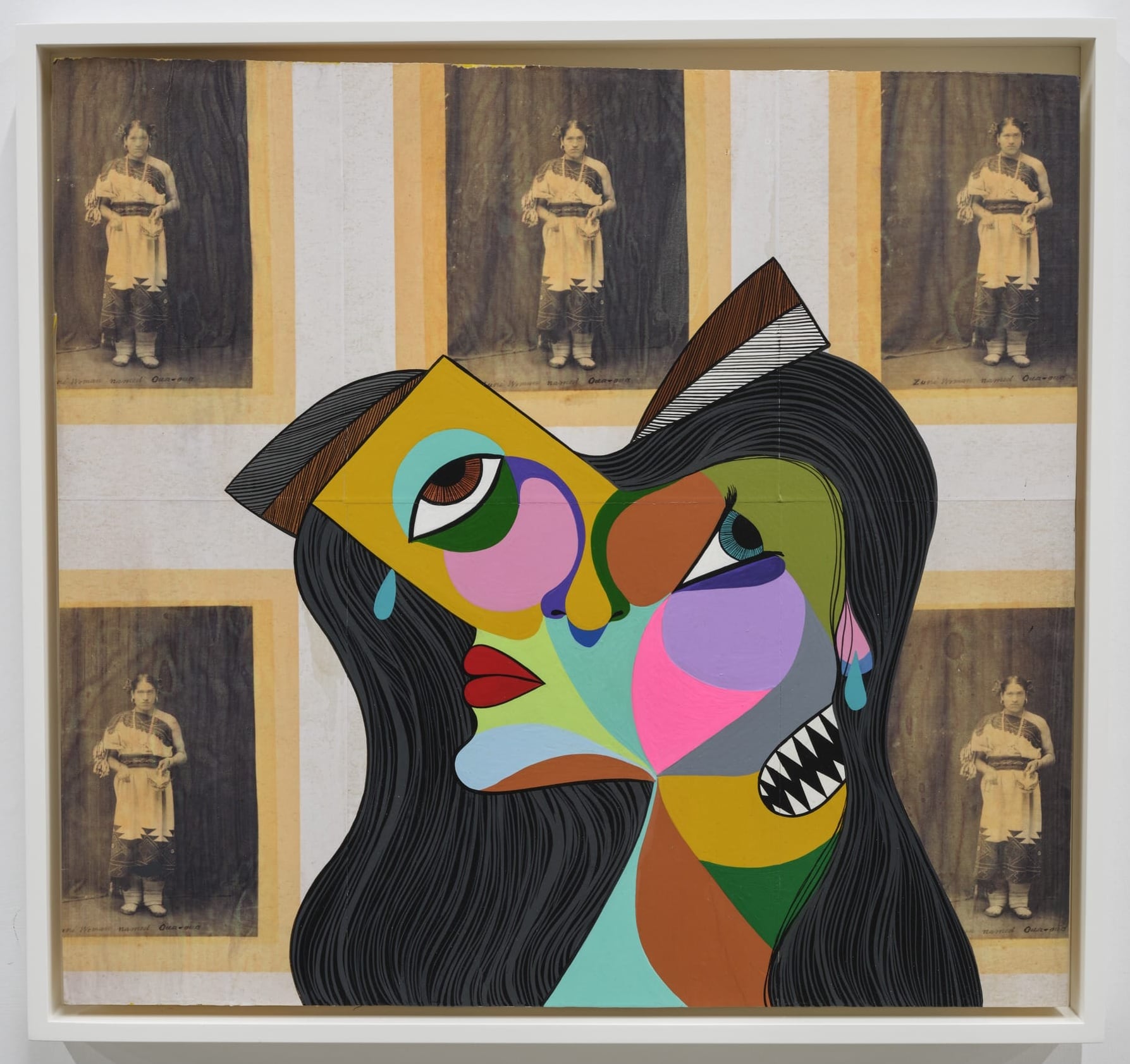
“We’wha” (2022), acrylic on ledger, 18 ¾ x 18 7/16 inches. Photos by David Kukla. All images © Sobé, courtesy of Participant Inc, shared with permission
The Pueblo of Zuni rests along the Western border of New Mexico, about 150 miles from Albuquerque. Well-known for mastering artisanal techniques such as inlaid silverwork, stone carving, beadwork, and basketry, the Zuni people—the A:Shiwi—have developed these intricate artforms for thousands of years.
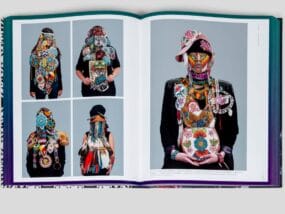
Artist Silvester Hustito, a.k.a. Sobé, was born and raised amid these flourishing handwork traditions, and much of the artist’s youth in Zuni was spent watching his mother make intricate needlepoint jewelry pieces. Sobé reflects on how pivotal this exposure was at such a young age in his first New York solo exhibition, Why Am I Alive Now? at Participant Inc. While some of the artist’s more sculptural works embody A:Shiwi techniques similar to beading, Sobé also incorporates the presence of printed media by creating a “skin” for acrylic portraiture.
As an avid magazine lover, the artist says, “Printed media was seen as taboo on the Zuni reservation. We don’t allow photography or sketching around the sacred ceremonies, and back in the day, we were forbidden to create representations of humans, as it might have been seen as witchcraft. I use the printed matter as documentation of our lives today, like the petroglyphs around the world.” Dipped in glue and plastered onto canvas, ephemera like magazine pages, inserts, and auction catalogs act as a living surface for abstract faces.
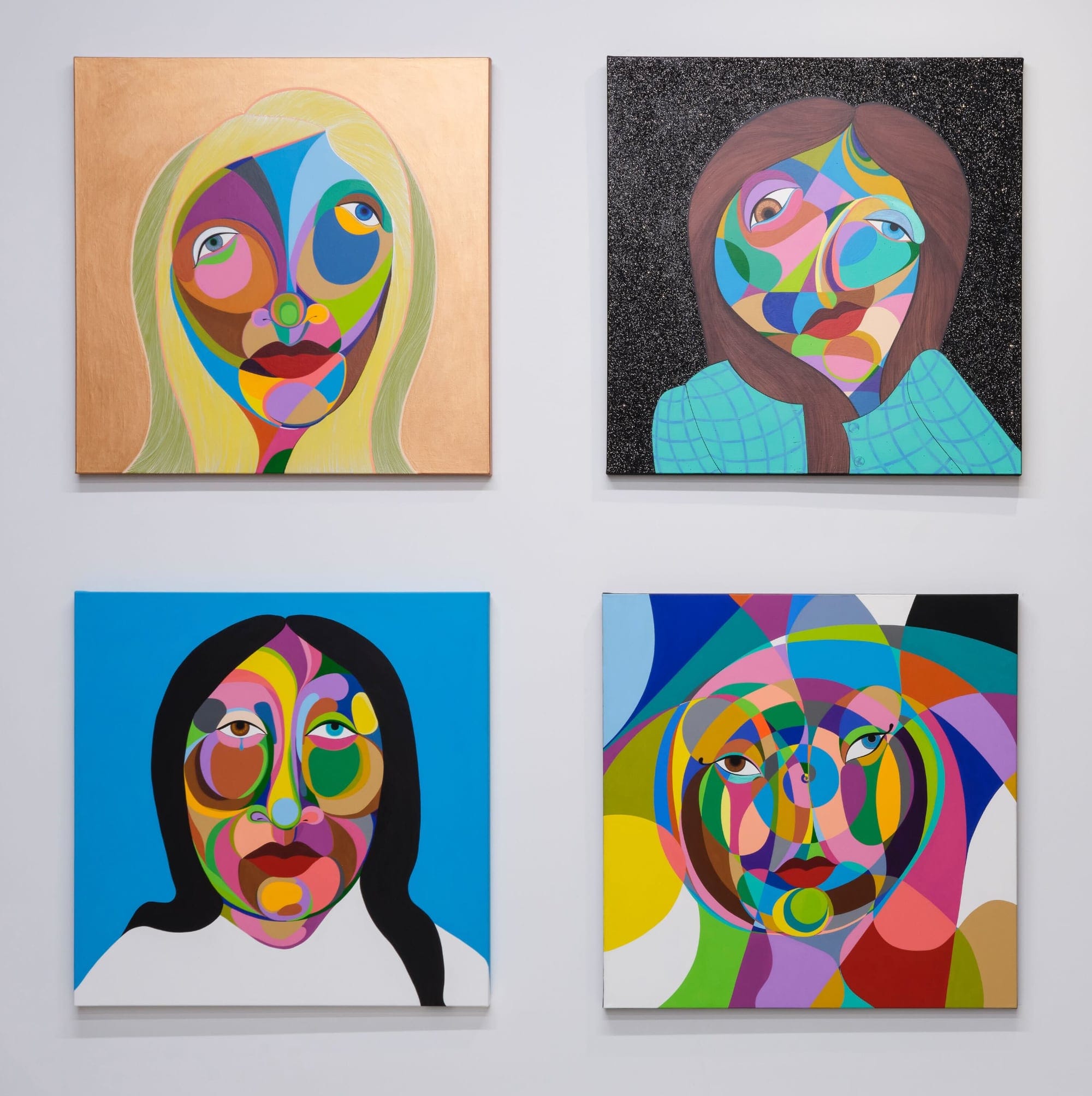
“Anohni, Kimberly, Self-portrait, and Inter-dimensional Traveling Two Spirit” (2024), acrylic on canvas, 36 x 36 inches
The geometric subjects are in a constant transformational state, morphing through a slew of angles, emotions, and identities. As the artist calls on the nuances of gender classification through metamorphic figures, positioning the influential Zuni figure We’wha (c.1849-1896) at the crux of his exhibition.
For the A:Shiwi, We’wha was a spiritual leader and artist who symbolized a third gender within the community known as Lhamana, or Two Spirit. We’wha took on roles in the tribe traditionally assigned to women, often honored and held in high regard. Their radiant spirit and transformative influence drives much of Sobé’s work, including images repeated in the background of the piece “We’Wha.” The artist shares:
Growing up in Zuni as a gay man was extremely tough, as it felt like all the two spirit voices had been muffled in our community due to outside influence. I’m glad I have saved the young carefree child in me, who lays awake at night in bed dreaming. I paint what I see or feel, and it doesn’t have to be gay themes; I just feel so blessed to be able to create in the moment. I can hear all the beautiful singing and drumming from the square nearby throughout the year. I’m super happy to be back home, where I am finally able to dig my rainbow-colored roots into middle earth.
Sobé recently moved back to Zuni after spending six years in the Bronx and continues to create work within the reservation. Why Am I Alive Now? continues in New York City through June 23. Follow the artist’s Instagram for updates.
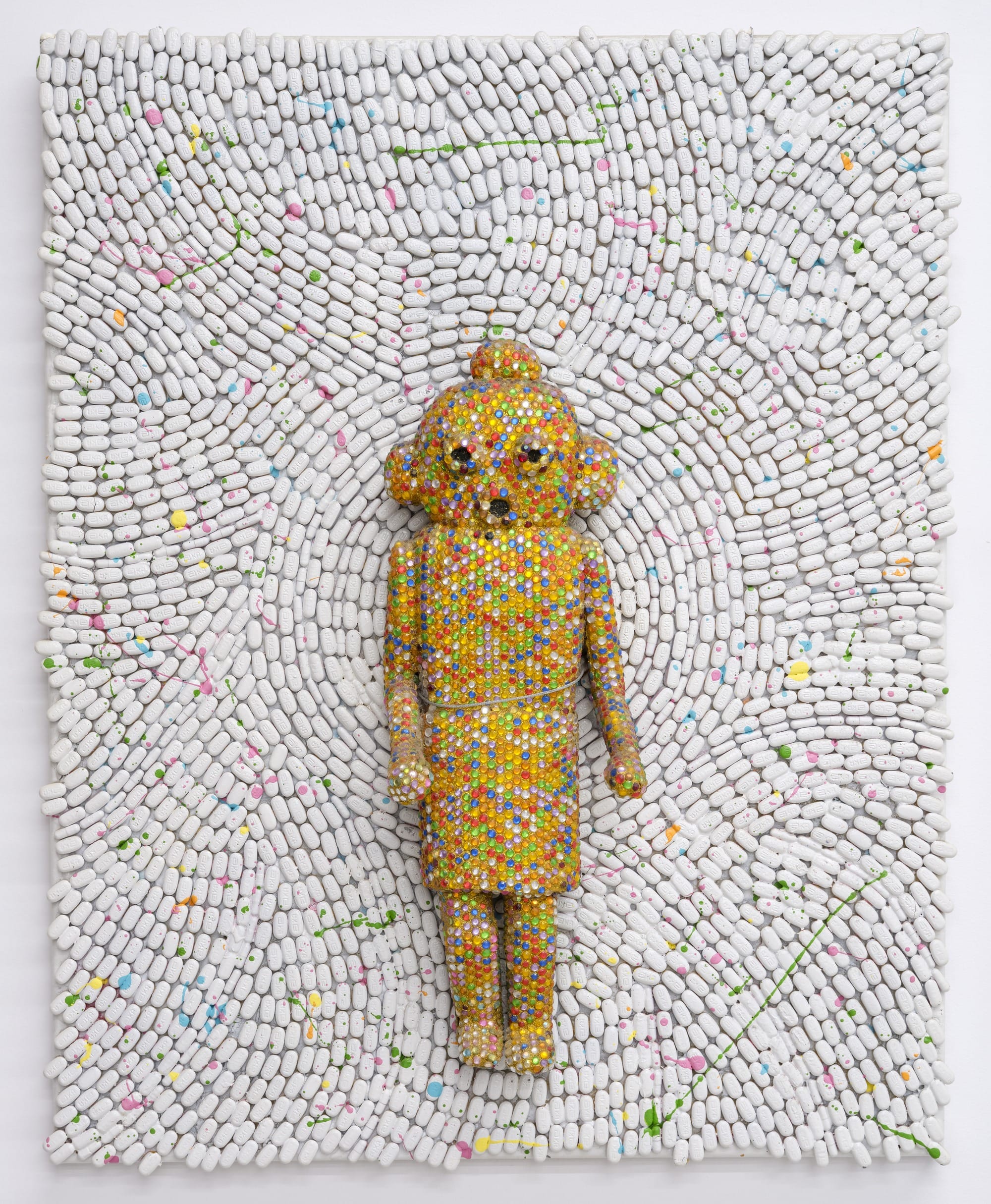
“Portal 1” (2016), styrofoam and crystals on mixed media on canvas
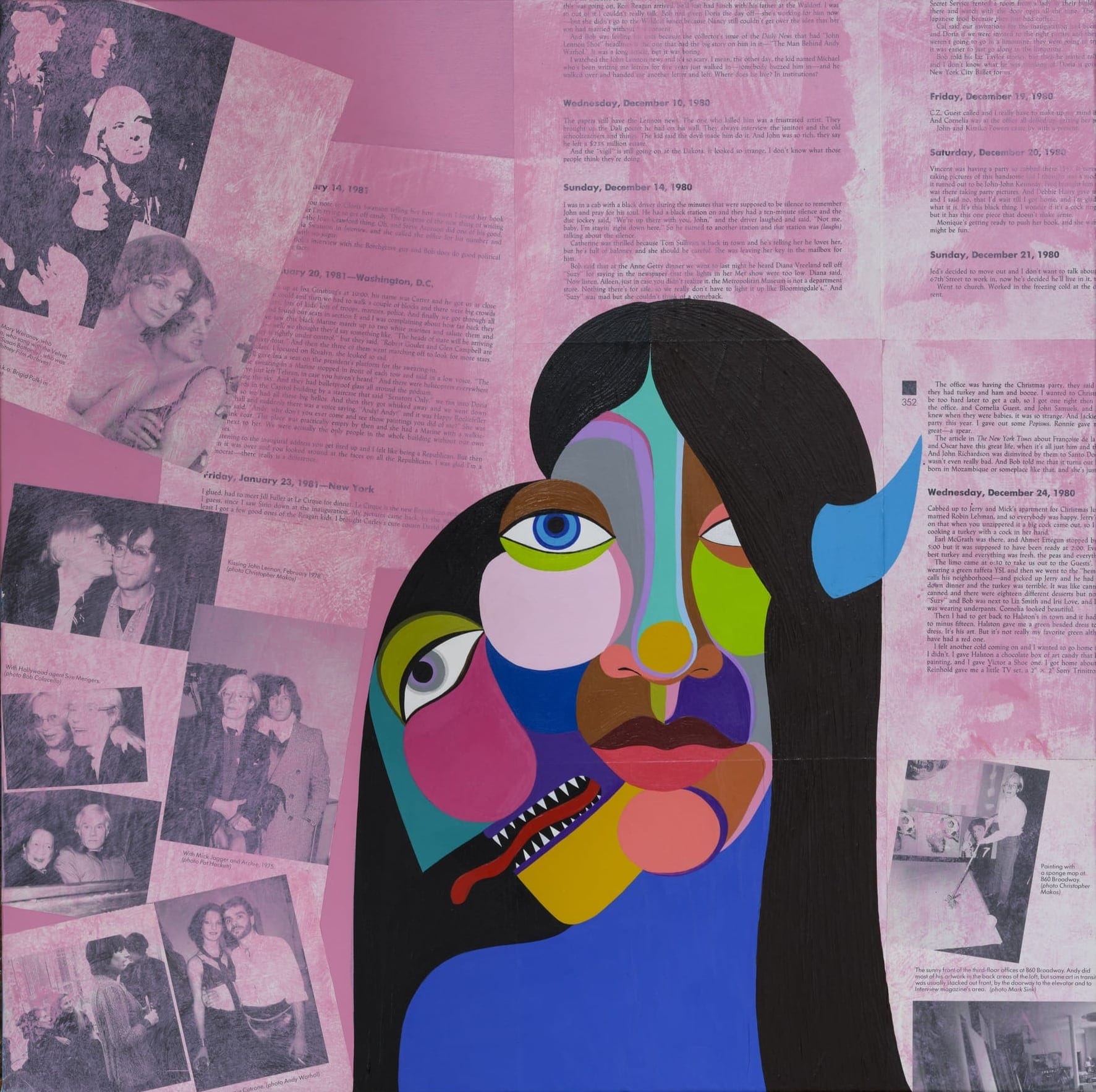
“Two Faces” (2024), acrylic on ledger on canvas, 24 x 24 inches
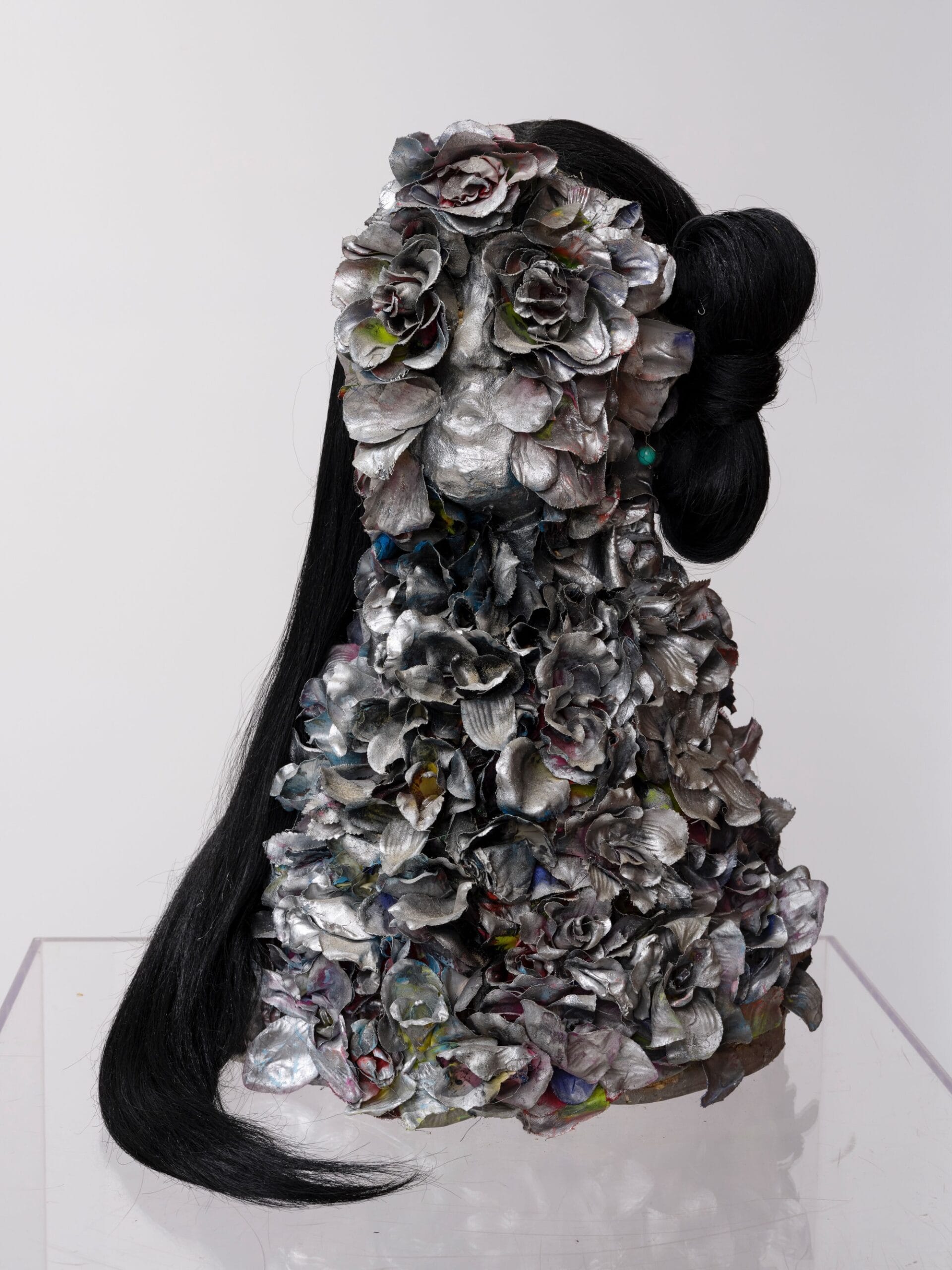
“Two Spirit Bust” (2016), mixed media, 19 x 18 inches
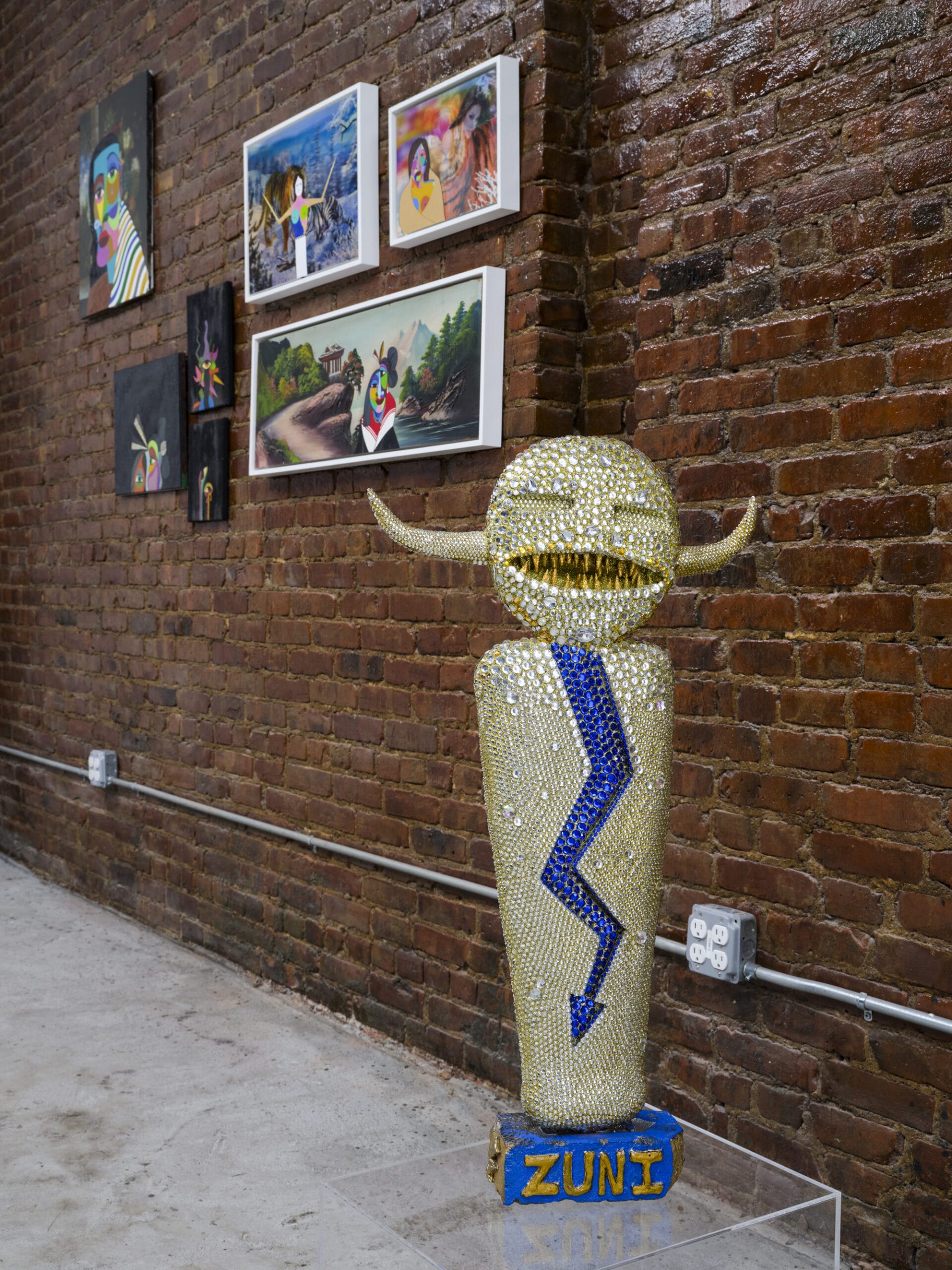
“Why Am I Alive Now?” installation view at Participant Inc, NY. Foreground: “Power Object #2 for Mark Flood” (2016), styrofoam, crystals
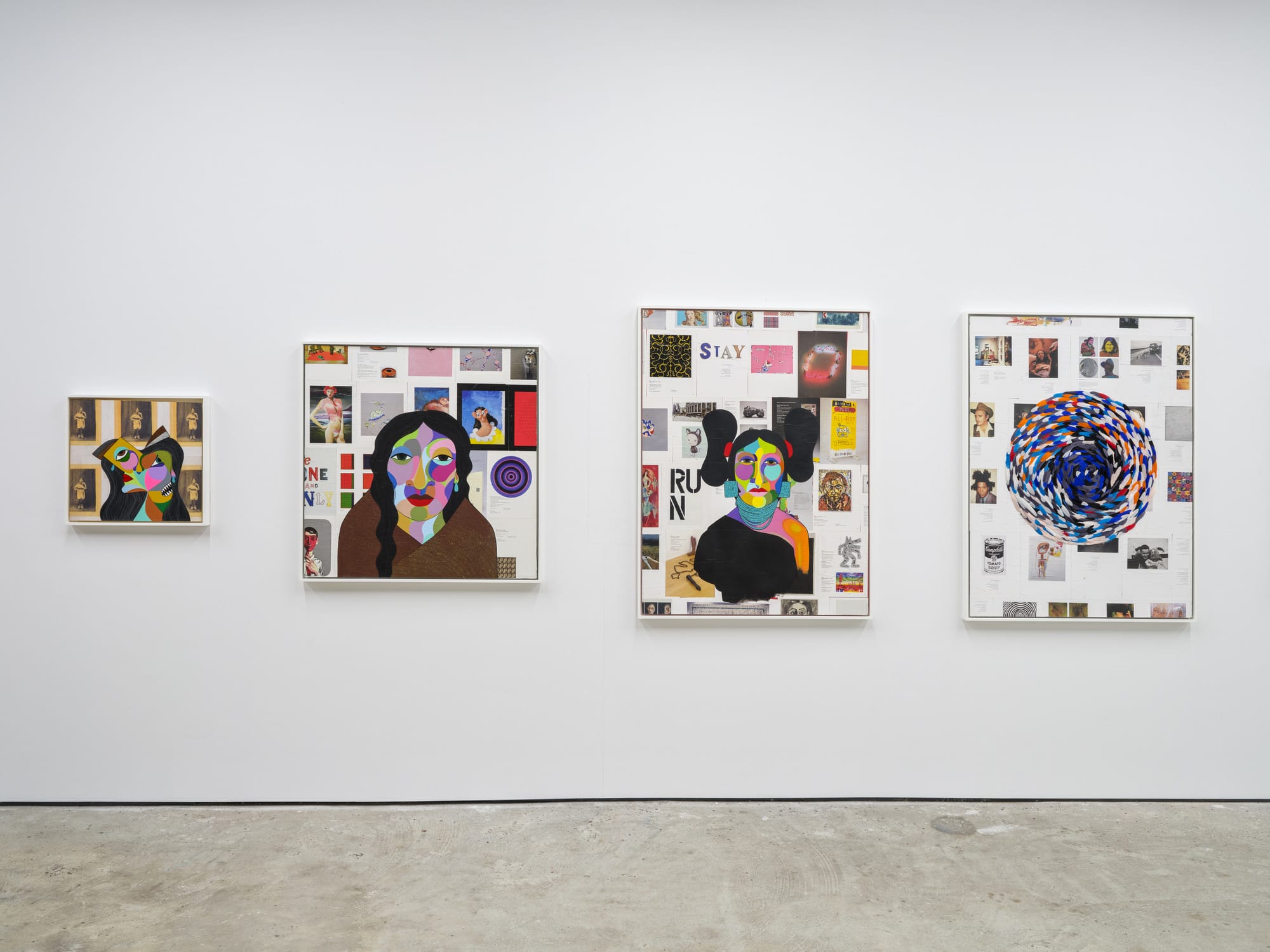
“Why Am I Alive Now?” installation view at Participant Inc, NY
#collage
#identity
#Indigenous culture
#painting
#sculpture
#Sobé
Do stories and artists like this matter to you? Become a Colossal Member today and support independent arts publishing for as little as $5 per month. You’ll connect with a community of like-minded readers who are passionate about contemporary art, read articles and newsletters ad-free, sustain our interview series, get discounts and early access to our limited-edition print releases, and much more. Join now!
Share this story
Also on Colossal
This article comes from the Internet:Sobé’s Morphing Portraits Articulate the Nuances of Gender Identity
